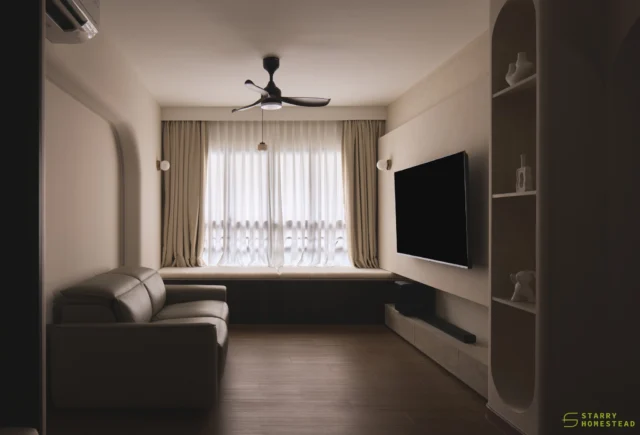
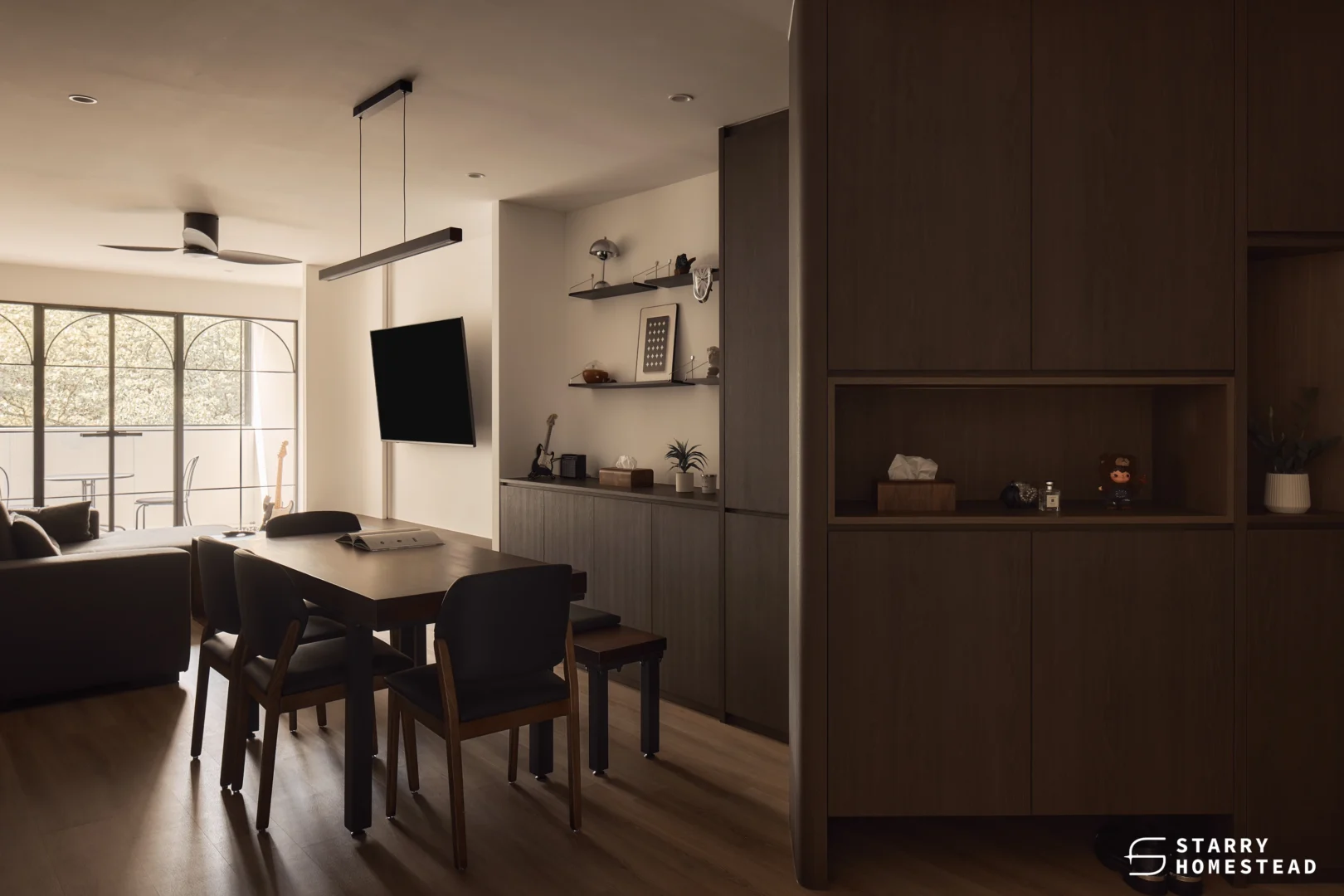
Not every living room in Singapore comes with a straightforward floor plan. Between older HDB flats, irregular condominium units, and landed homes with mixed ceiling heights, awkward layouts are a regular feature of the local housing landscape. The good news: most of these quirks open the door to more considered, characterful design. The right awkward living room layout ideas turn structural constraints into visual interest.
Long and Narrow Living Rooms
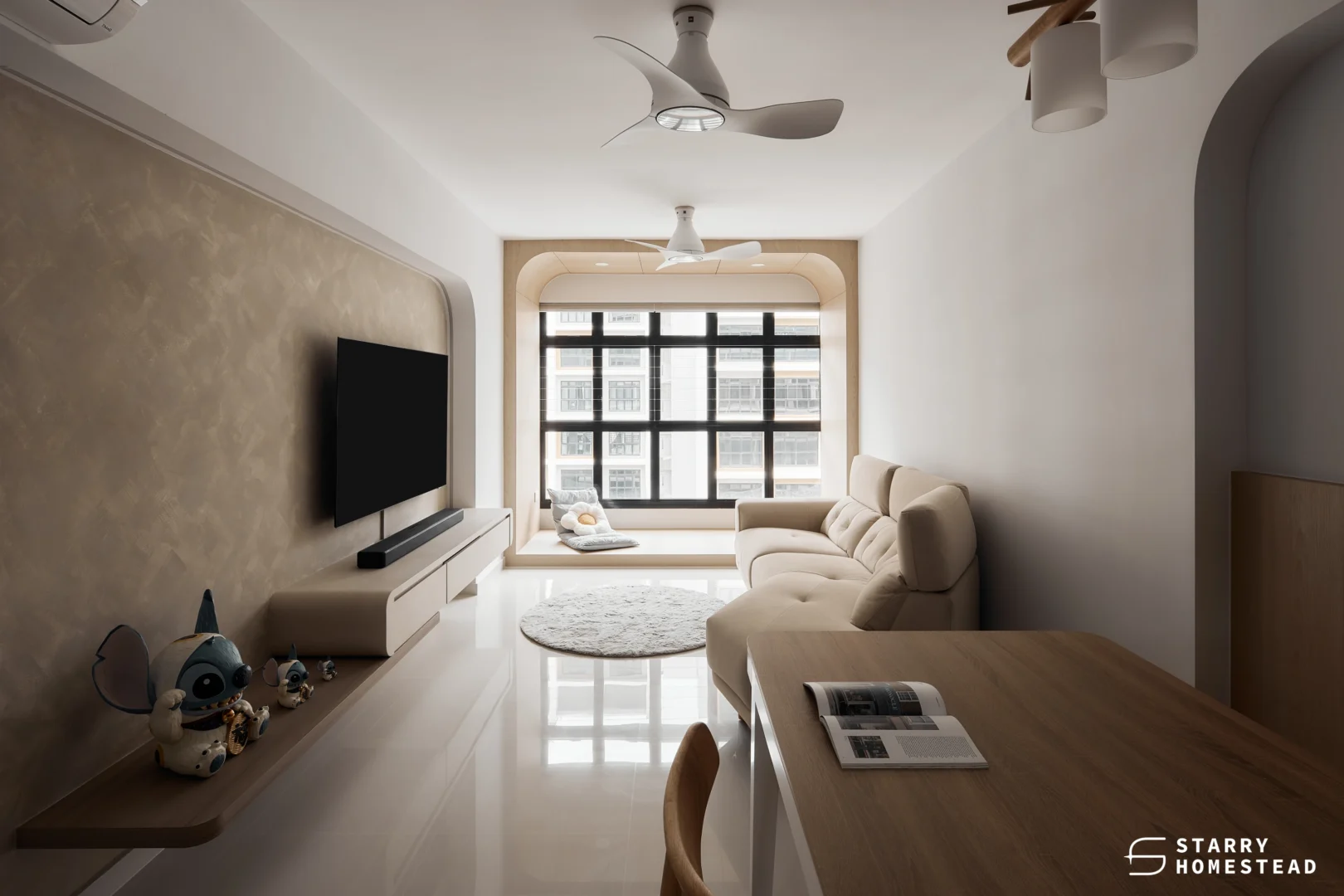
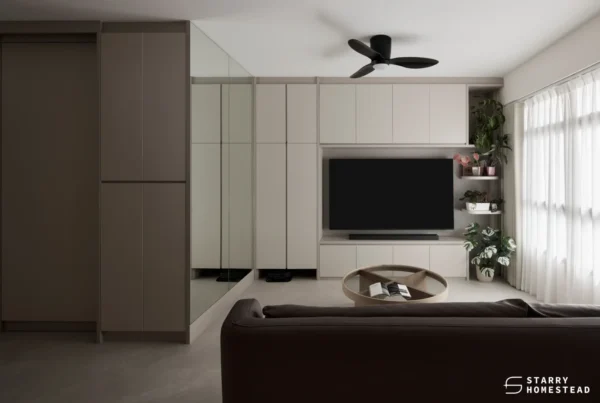
Long and narrow rooms are common in HDB flats where the layout runs deep rather than wide. The challenge is to keep the space from feeling like a corridor while still allowing for clear circulation.
Working out how to arrange furniture in a narrow living room starts with the sofa. Anchor it against the longest wall and avoid pieces that block sightlines into the rest of the home. One effective idea is to pair this with a rug that draws the eye across the width rather than along the length, which visually broadens the proportions. Built-in carpentry along one wall adds storage without consuming floor space, a detail that experienced BTO interior design teams handle particularly well. Long, deep rooms benefit especially from defined zones that prevent the awkward layout from reading as a single uninterrupted block.
Open Plan Spaces
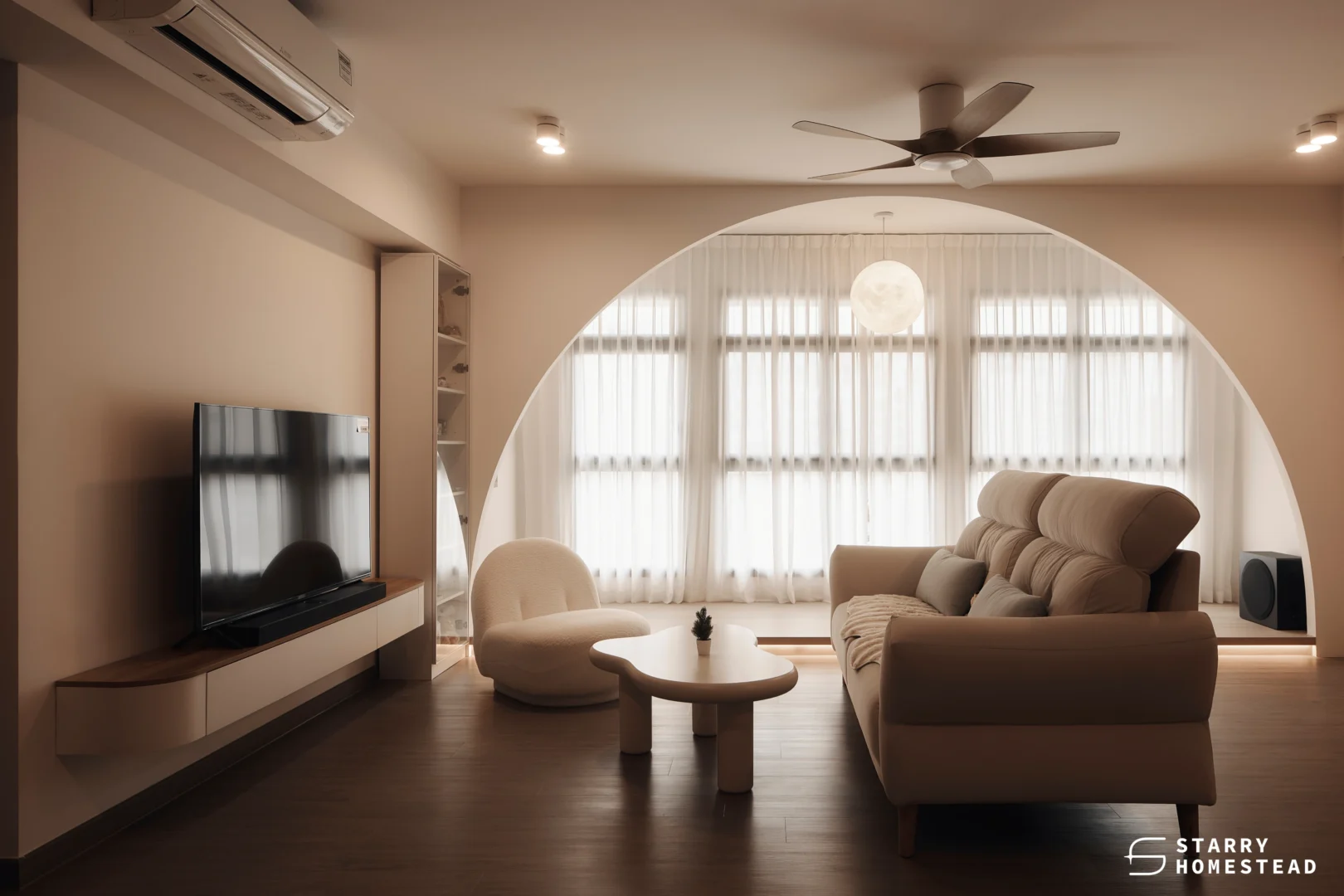
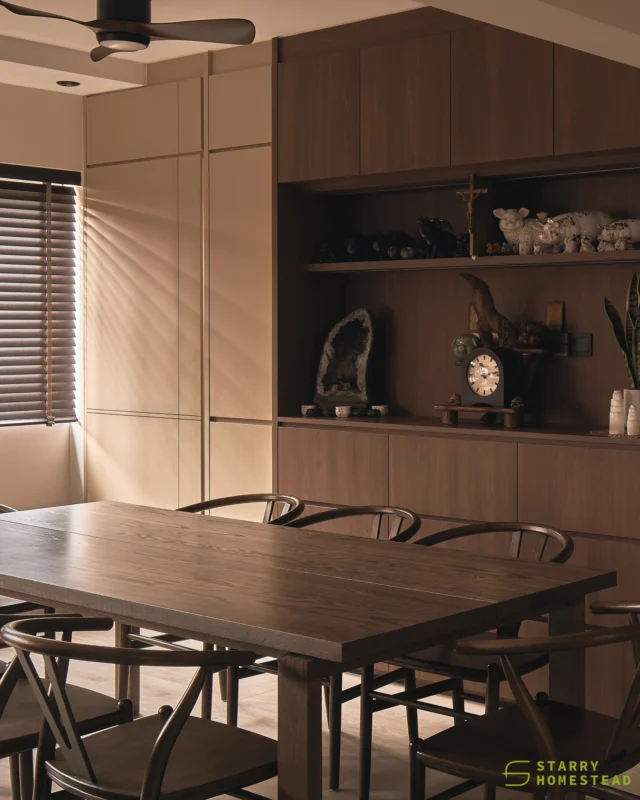
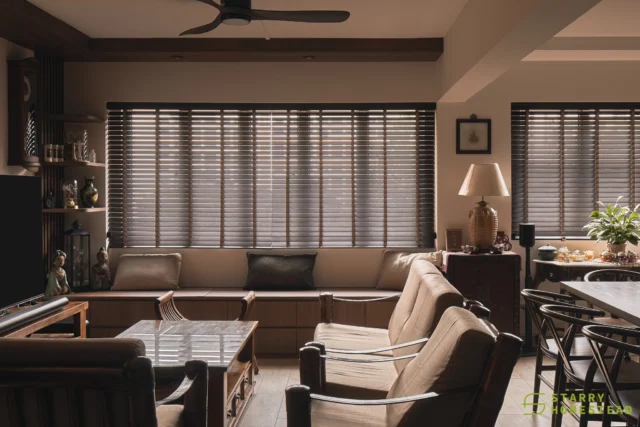
Open layouts are increasingly common in landed properties and in HDB and condominium units, where walls have been removed to create more generous living areas. The challenge lies in defining distinct living, dining, and circulation zones without physical boundaries.
Furniture placement, lighting changes, and transitions in flooring materials can all create visual separation. A shift from tile to timber, or a pendant light positioned over the dining table, signals one zone ending and another beginning. Restraint is essential here. Over-furnishing erodes the openness that makes the layout work in the first place.
Angled Walls
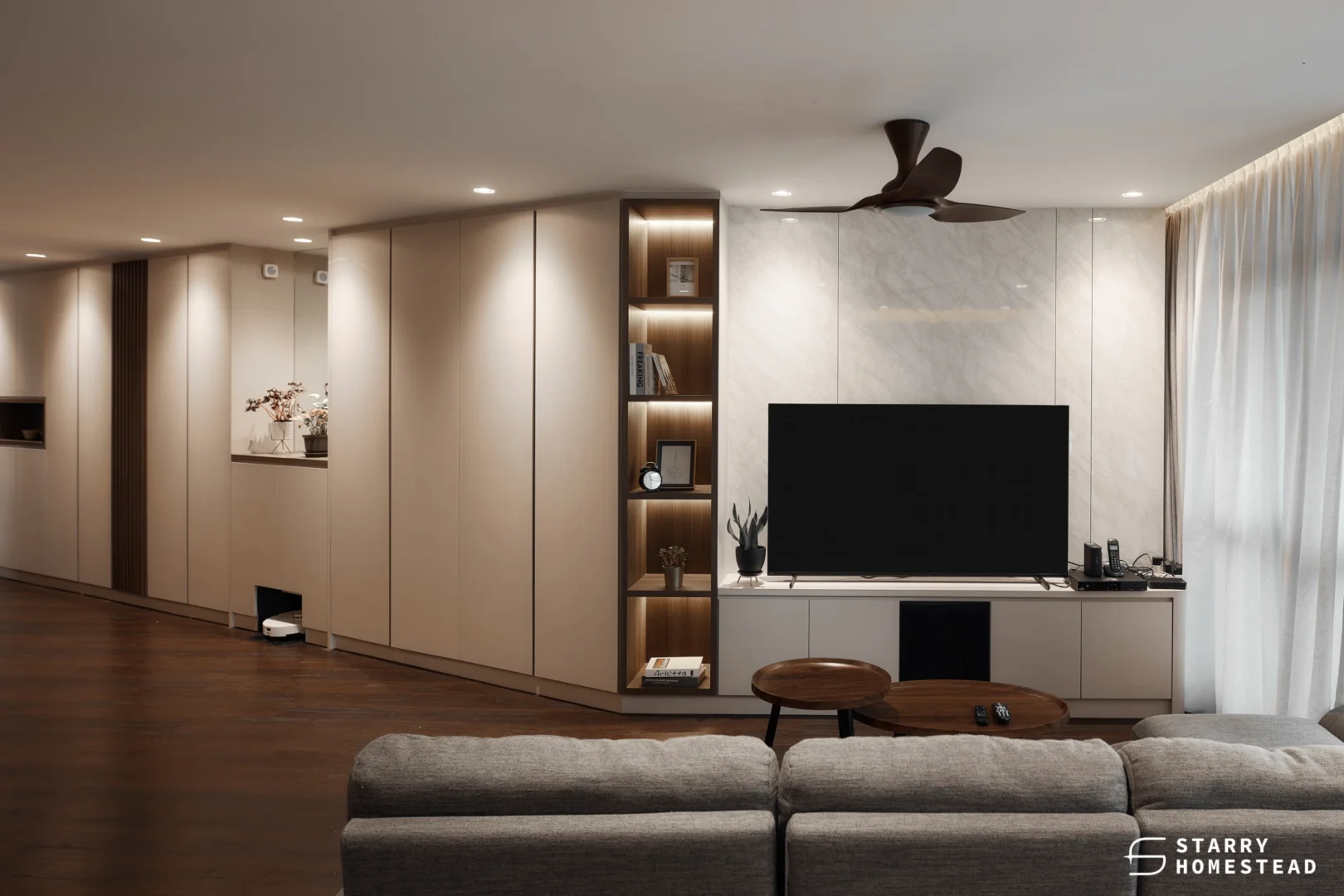
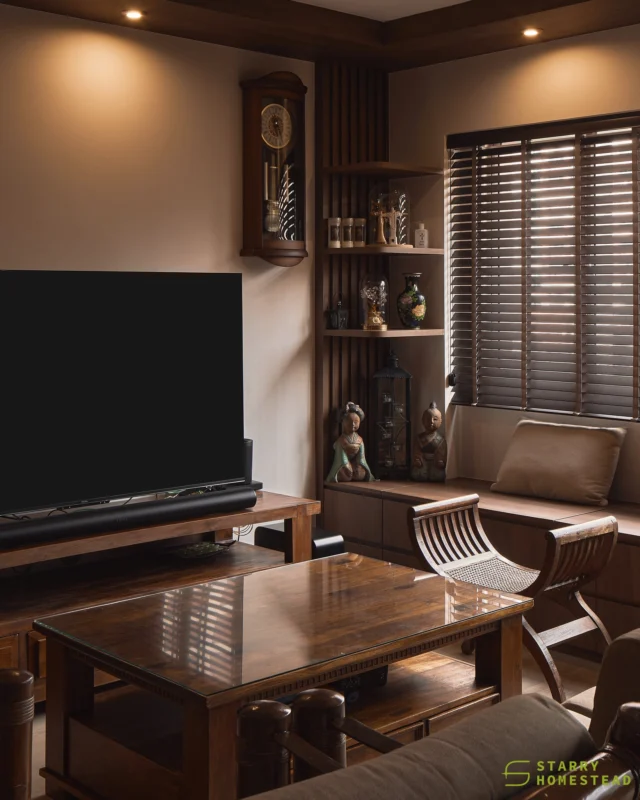
Angled walls appear in corner units across HDB and condominium developments. They disrupt conventional furniture arrangement and tend to leave dead, awkward corners that are easy to ignore.
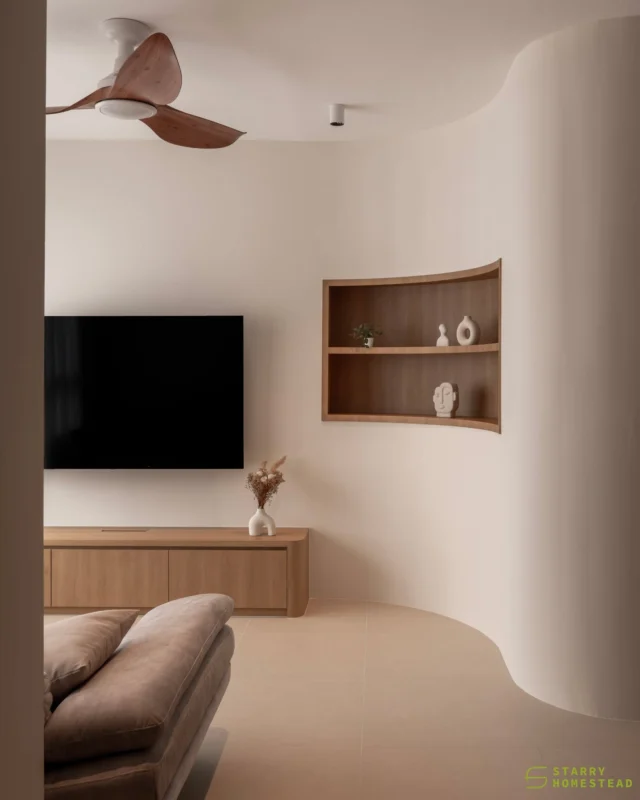
Turn the angle into a feature instead. A practical idea is to fit a custom built-in shelf to the exact geometry, place a statement armchair in the corner, or design a display nook that works with the wall rather than against it. Rectangle-shaped living room layouts often rely on the same principle: treating the room’s geometry as a design cue rather than a constraint.
Spaces with Columns
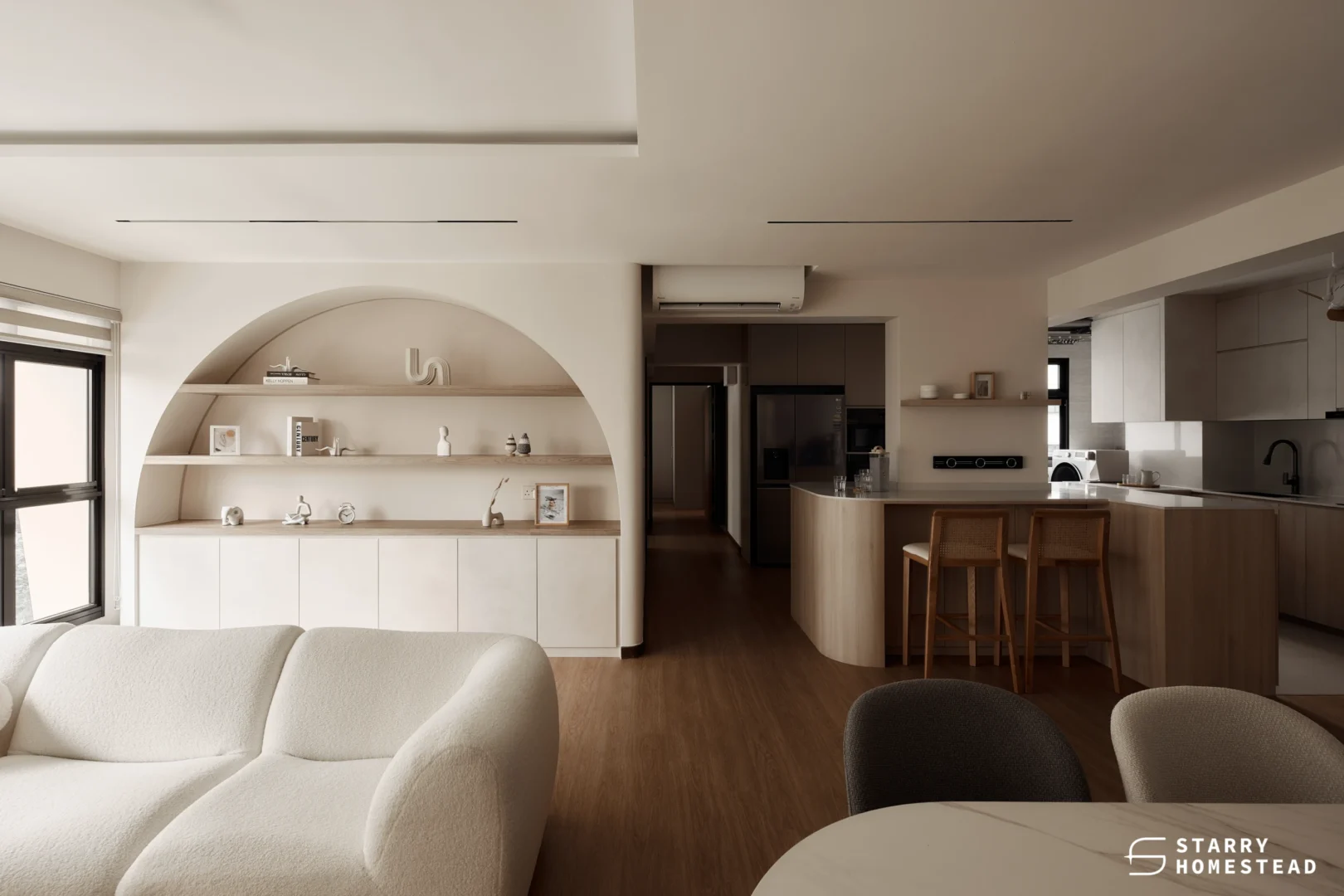
Columns are a structural reality in older HDB flats and certain condominium layouts. They interrupt natural furniture arrangement and can fragment the visual flow of a room. A skilled HDB interior designer will treat the column as part of the design rather than an obstacle within it.
Awkward small living room layout ideas often start with this kind of structural feature. Build around it with custom joinery, use it to anchor a shelving unit, or incorporate it into a feature wall treatment with timber cladding or textured paint. The column then reads as a deliberate element of the room rather than an awkward intrusion.
Sloped or Lofted Ceilings
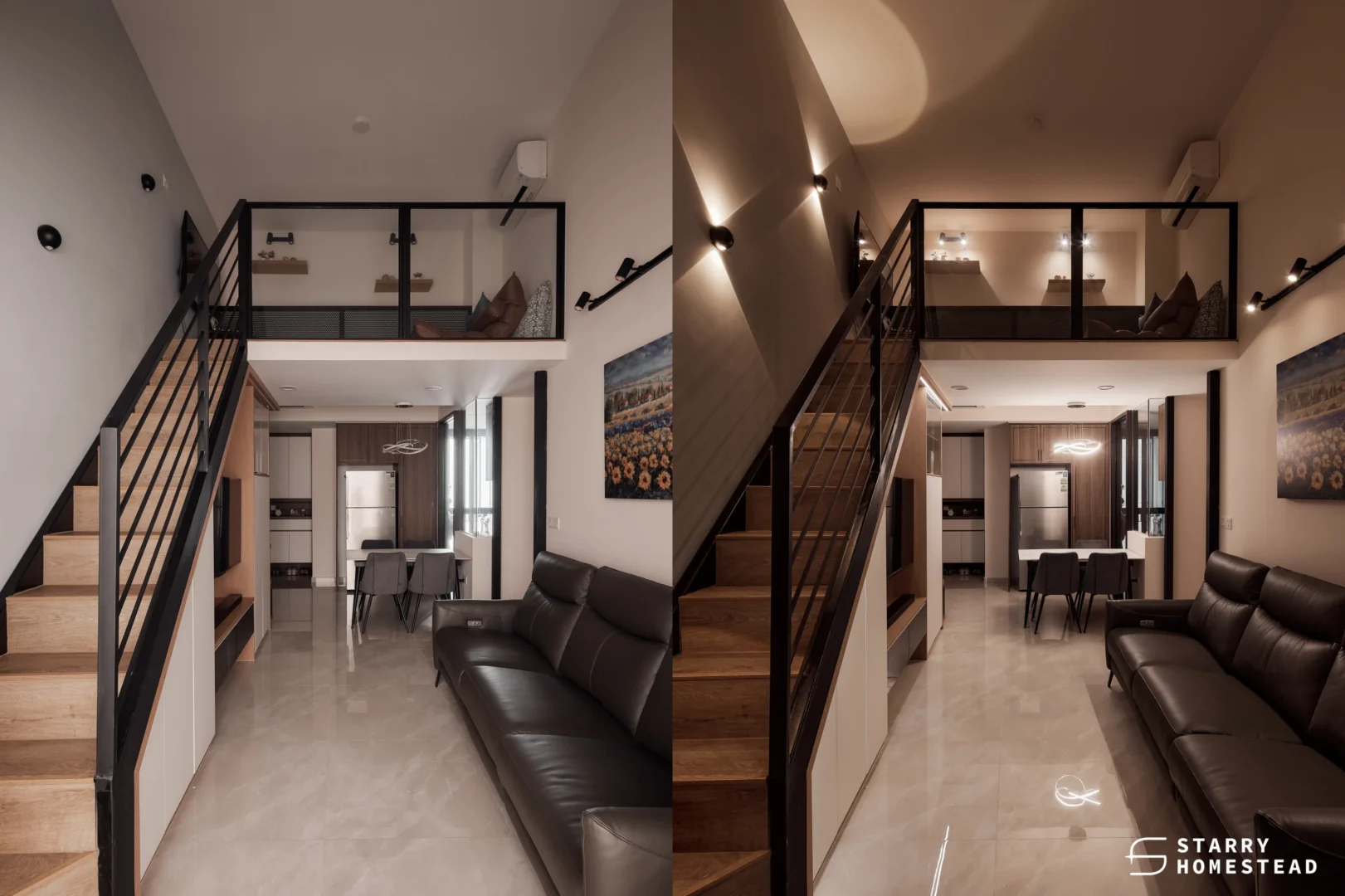
Sloped and lofted ceilings are typical in landed properties with attic conversions or double-volume living areas. Low-sloped sections limit furniture placement, while high lofted areas can feel cavernous if left undefined.
Reserve low-ceiling zones for seating and storage, and use the height of lofted sections for statement lighting or vertical display. The variation in ceiling height itself becomes a natural zoning tool, dividing the room without requiring additional partitions.
Designing Around the Quirks of Your Home
Every awkward living room layout challenge has a design solution. Most require spatial understanding and considered planning rather than a costly structural overhaul.
Starry Homestead works across HDB, condominium, and landed properties, including the floor plans that other studios find difficult to resolve. Speak with our designers today to find the right approach for your space.