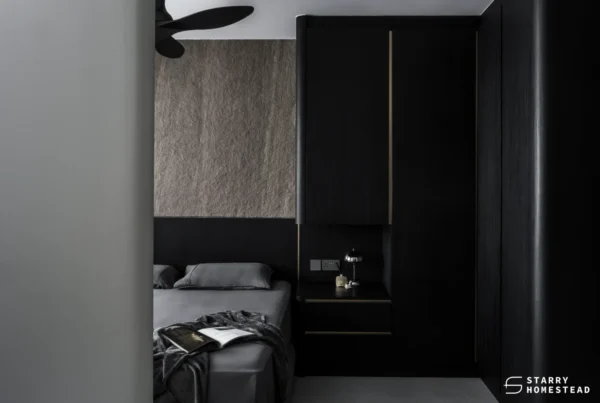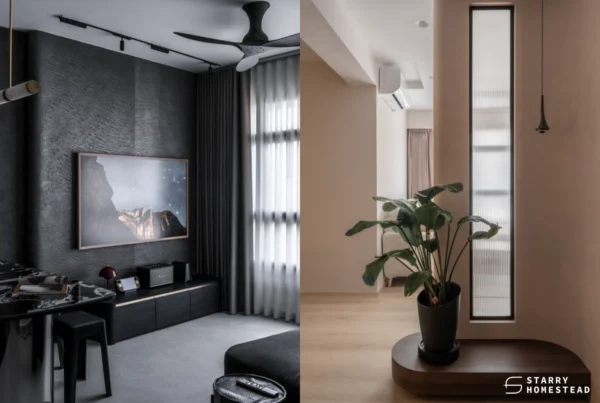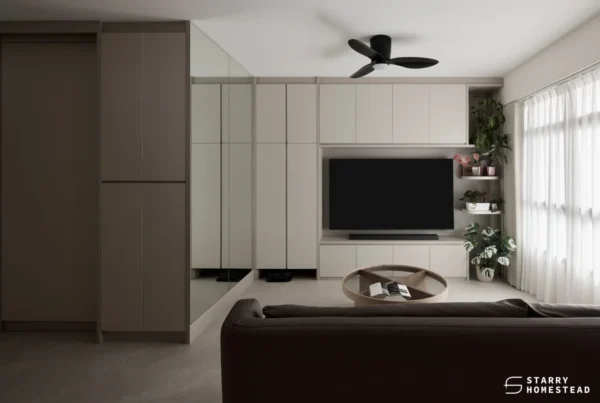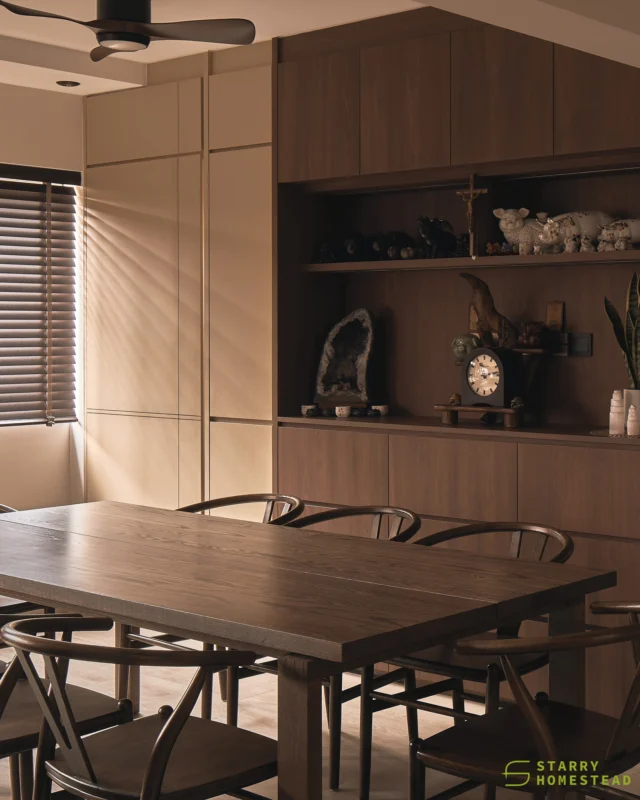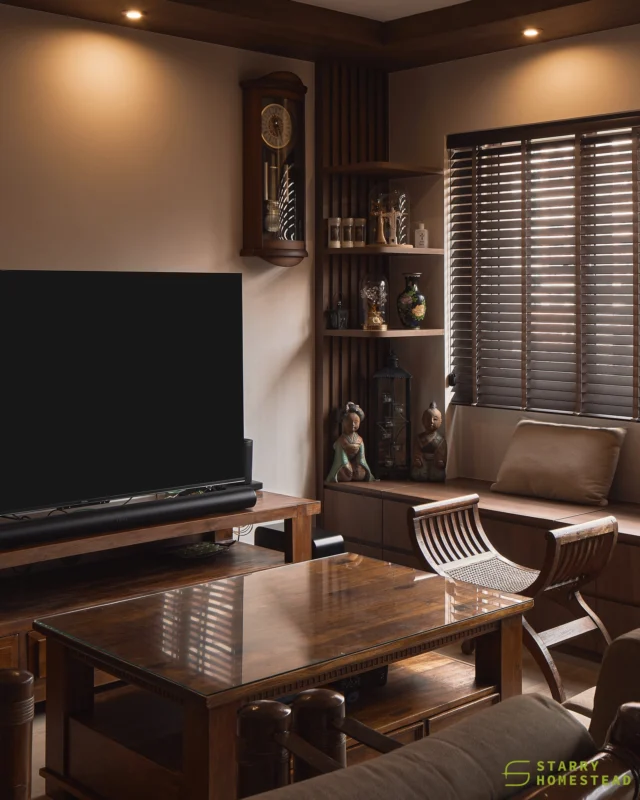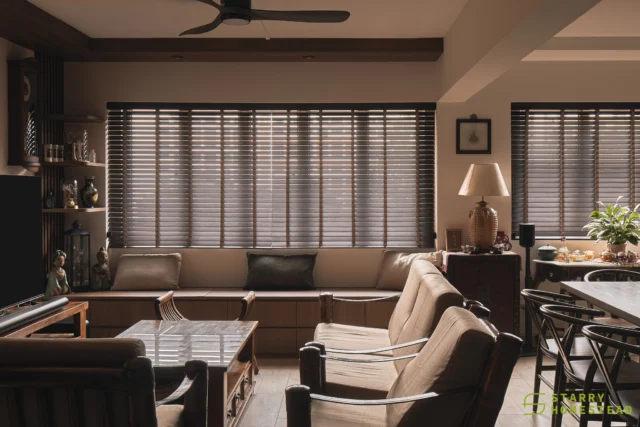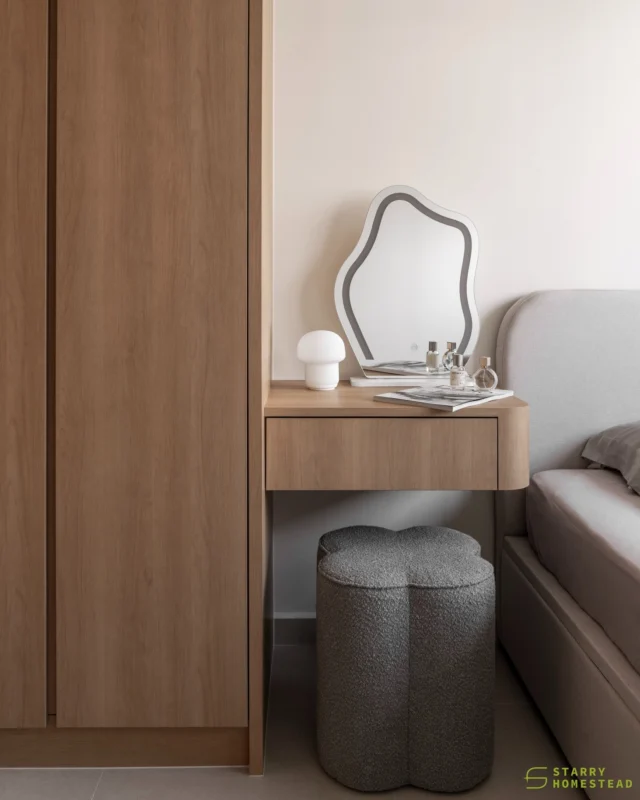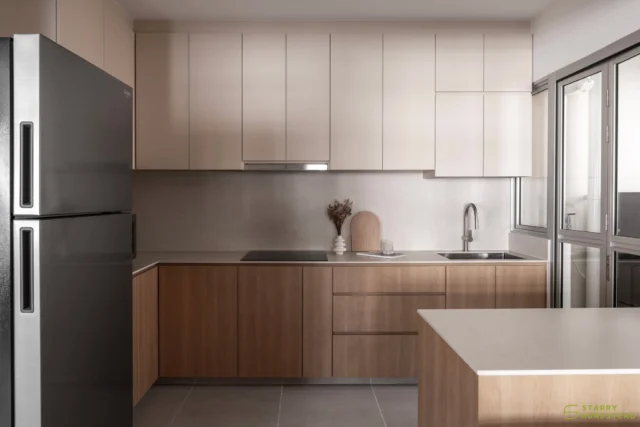
When planning a home renovation, homeowners often spend considerable time choosing furniture, flooring, carpentry and colour schemes. However, one element that can significantly influence the overall look and feel of a home is lighting. Good lighting does more than brighten a room. It creates atmosphere, highlights design features and makes everyday activities more comfortable. In Singapore homes, where space and natural light can vary significantly between HDB flats, condominiums and landed properties, thoughtful lighting design is especially important. Whether you prefer a cosy, warm interior or a bright and contemporary living space, understanding the different types of lighting can help you create a home that is both functional and visually appealing.
Understanding the Three Types of Lighting
A well-designed lighting scheme typically combines three main types of lighting: ambient, task and accent lighting. Rather than relying on a single ceiling light to illuminate an entire room, layering these different light sources creates a more balanced and versatile environment.
Ambient Lighting: General Illumination
Ambient lighting provides the overall illumination of a room. It acts as the main source of light, allowing homeowners to move around comfortably and carry out everyday activities.
Common ambient lighting options include:
- Recessed downlights
- Ceiling-mounted lights
- Cove lighting
- Chandeliers
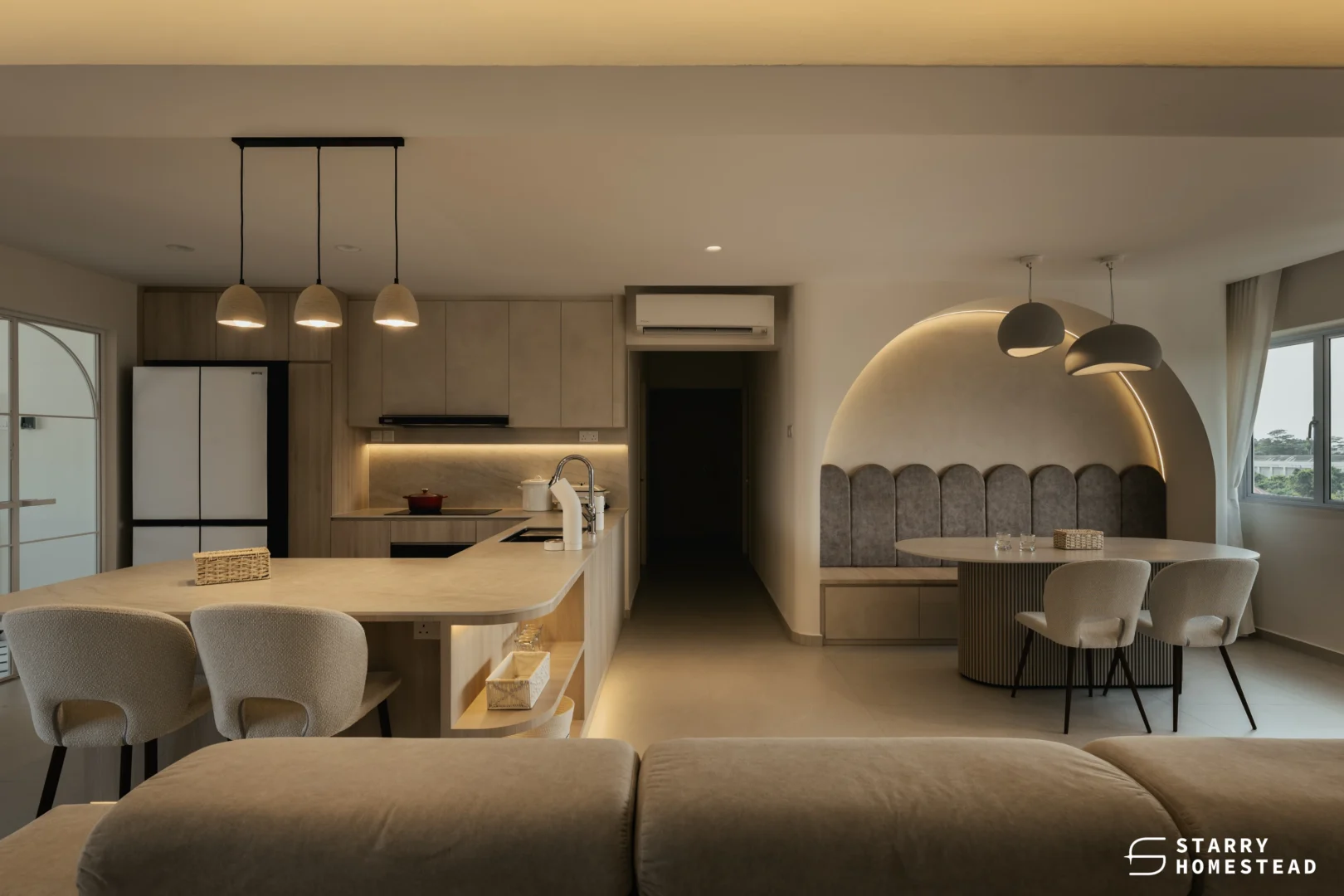
For living rooms and bedrooms, recessed downlights can create a clean and understated appearance. Cove lighting, meanwhile, produces a softer glow by concealing LED strips within ceiling recesses or architectural details. The key is to distribute light evenly without making the space feel excessively bright or harsh.
Task Lighting: Lighting for Everyday Activities
Task lighting focuses on specific areas where additional illumination is needed. It is particularly useful for activities that require better visibility and concentration.
Examples include:
- Under-cabinet LED strips for kitchen countertops
- Pendant lights above kitchen islands
- Desk lamps for study areas
- Reading lights beside the bed
- Mirror lights around bathroom vanities
For example, relying solely on ceiling lights in the kitchen may create shadows when preparing food. Installing task lighting beneath overhead cabinets helps illuminate the countertop directly, making food preparation safer and more convenient.
Accent Lighting: Highlighting Design Features
Accent lighting adds depth and visual interest by drawing attention to selected features within a home.
It can be used to highlight:
- Feature walls and textured surfaces
- Display shelves and collectibles
- Artwork and decorative pieces
- Architectural details and niches
- Carpentry and open shelving
LED strip lights within display cabinets or concealed lighting along feature walls can create a subtle, sophisticated effect. Unlike ambient lighting, accent lighting is not intended to illuminate the entire room. Its purpose is to create focal points and enhance the overall interior design.
Choosing the Right Colour Temperature
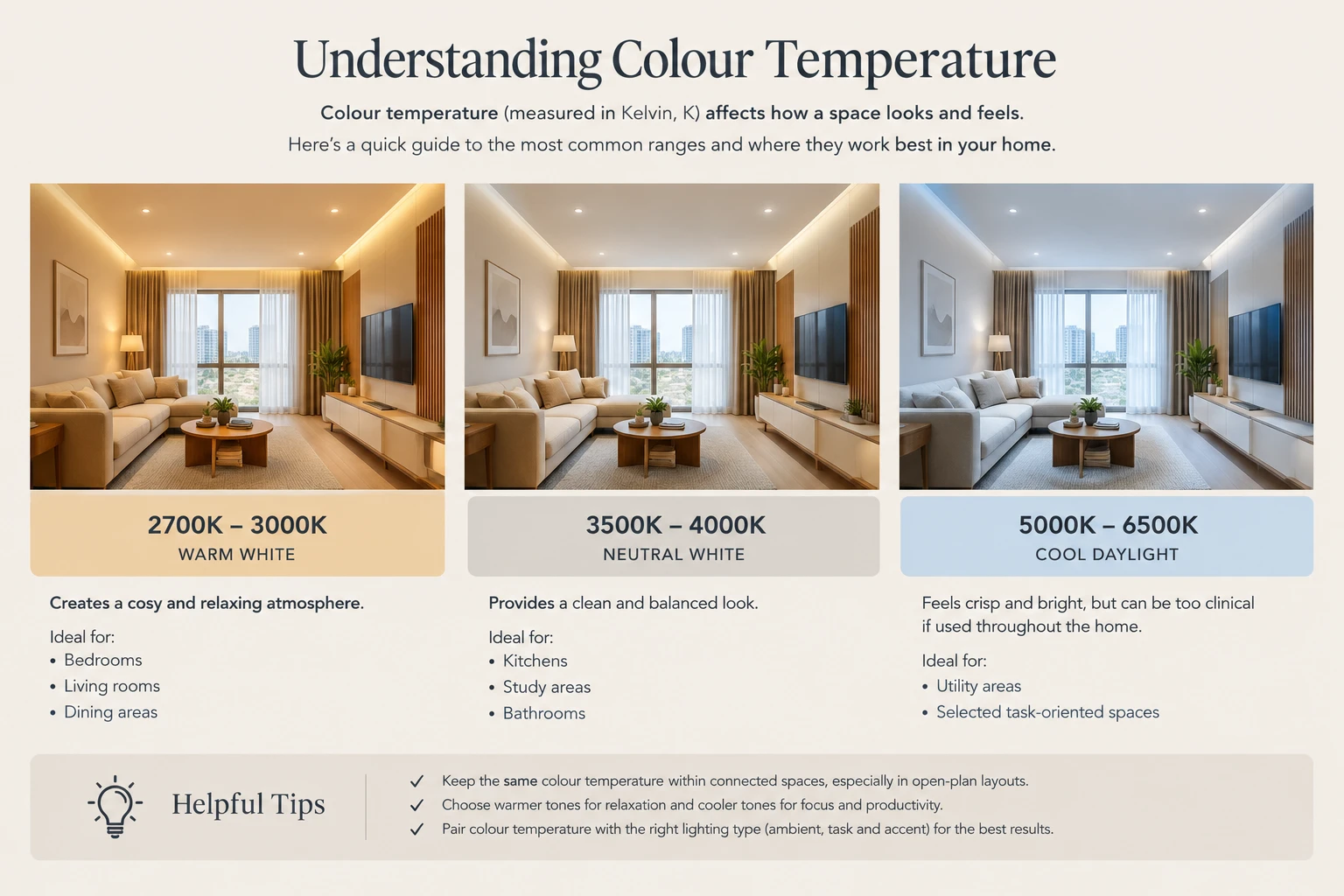
Apart from the type of lighting, colour temperature also affects how a room looks and feels. Measured in Kelvin (K), colour temperature generally falls into three categories:
Lighting Ideas for Different Areas of Your Home
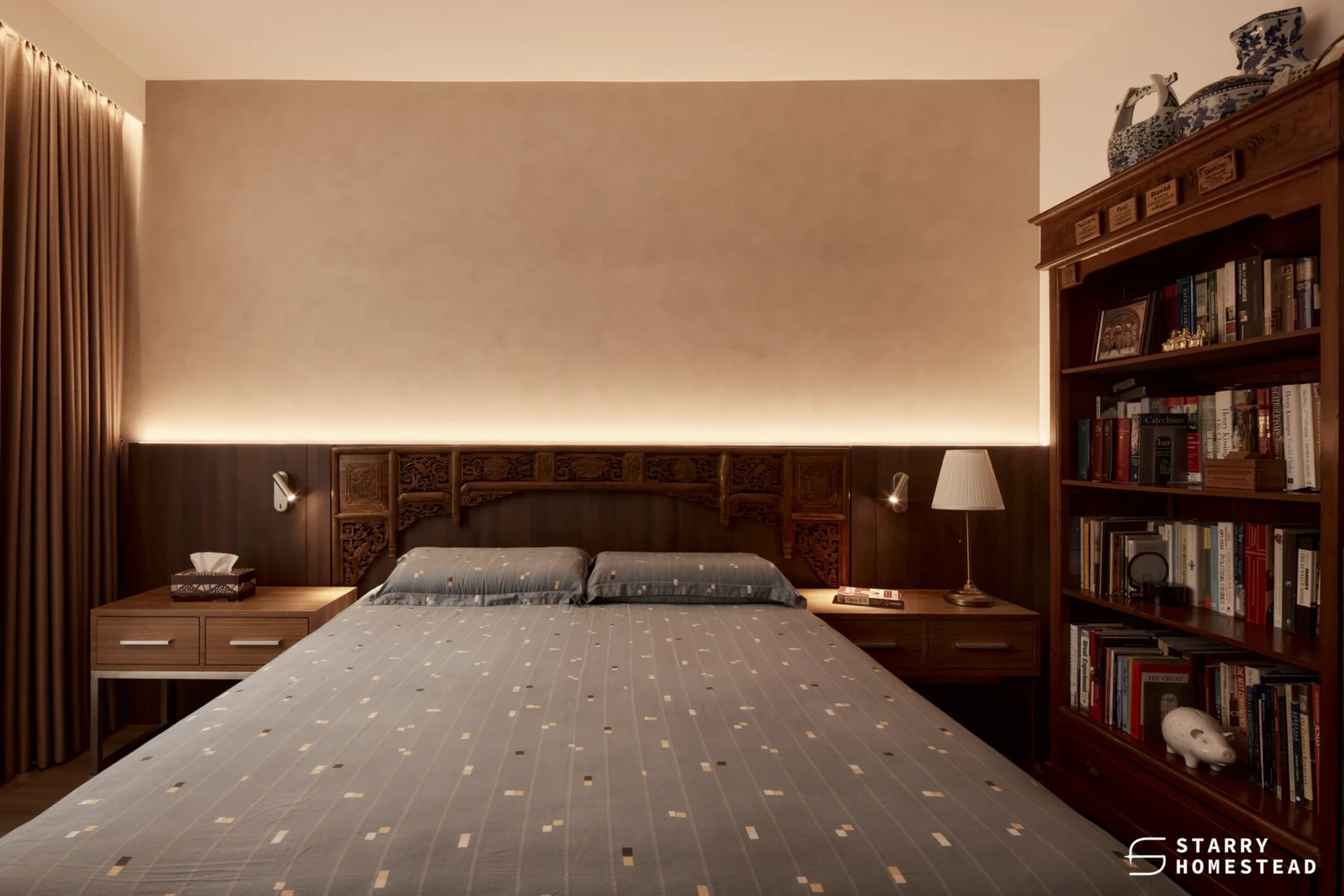
Each room serves a different purpose, so its lighting arrangement should reflect how the space is used. In the living room, combine ambient lighting with accent lighting to create a comfortable environment. Recessed downlights provide general illumination, while cove lighting or floor lamps introduce a softer atmosphere for relaxing in the evening. In the kitchen, a combination of ambient and task lighting is essential. Use ceiling lights for overall visibility and LED strips beneath cabinets to illuminate food preparation areas. Pendant lights can also add character above a kitchen island or dining counter. For the bedroom, prioritise comfortable, warm lighting with bedside lamps or wall-mounted reading lights that provide focused illumination without requiring the main ceiling lights to be switched on. Concealed LED strips can also create a gentle glow around the headboard. In the bathroom, good lighting around the vanity and mirror is important for grooming activities. Combine general ceiling lighting with suitable mirror lighting to minimise shadows around the face. Finally, in the study room, choose practical task lighting that illuminates the desk without creating unnecessary glare on computer screens. Adjustable desk lamps are useful as they allow homeowners to direct light where it is needed.
Make the Most of Natural Lighting
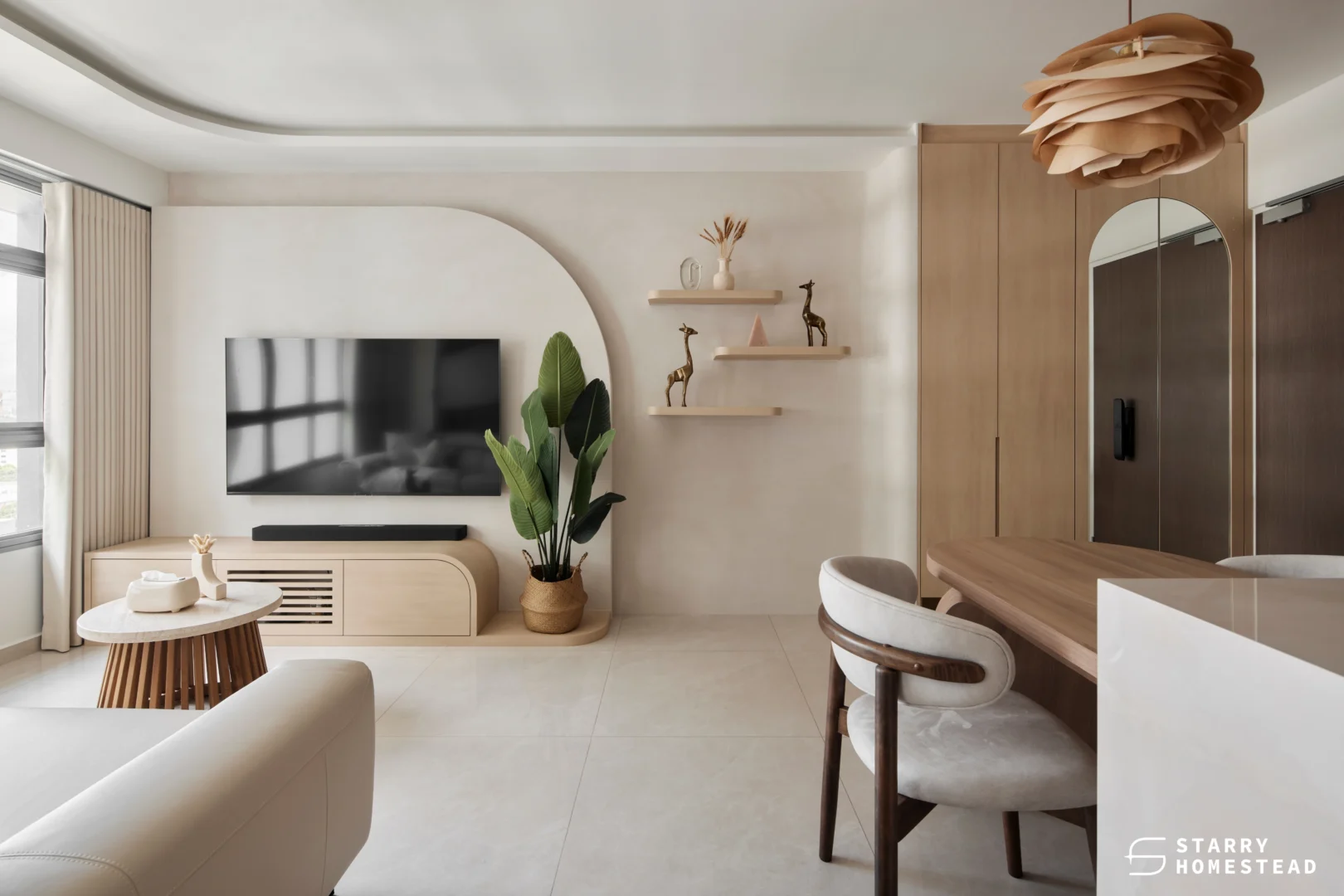
Artificial lighting is only one part of a well-planned lighting scheme. Natural daylight should also be considered during the renovation process. Where possible, keep windows unobstructed and choose window treatments that allow sufficient daylight into the home while maintaining privacy. Mirrors can also help reflect natural light into darker areas. Strategically positioning a mirror opposite or adjacent to a window can make a compact space feel brighter and more open. Natural lighting is also an important element of biophilic design, which focuses on bringing nature into the home through daylight, greenery and natural materials. These elements are increasingly featured in modern residential interiors, as explored in Starry Homestead’s 2026 interior design trends guide.
Common Lighting Mistakes to Avoid
Even beautiful lighting fixtures may not produce the desired result if they are not planned properly. Here are some common mistakes to watch out for:
Using only ceiling lights: A single lighting source can make a room look flat and create unwanted shadows. Incorporate task and accent lighting to add depth.
Installing too many downlights: More lights do not necessarily mean better illumination. Excessive downlights can make the ceiling look cluttered and create glare.
Choosing the wrong colour temperature: Mixing warm and cool lighting without a clear plan can make connected spaces feel inconsistent. guide
Overlooking electrical planning: Decide where switches, dimmers and power points should be located before renovation works begin. This is especially important for built-in lighting and concealed LED strips.
Ignoring furniture placement: Lighting positions should complement the intended arrangement of furniture, rather than being planned independently.
Plan Your Lighting Before Renovation Begins
Lighting should not be treated as a last-minute decorative addition. Ideally, it should be incorporated during the initial interior design and space-planning stage. This allows your interior designer and electrician to coordinate ceiling layouts, electrical points, switches, lighting fixtures and concealed wiring before installation begins. For homeowners incorporating smart home features, consider whether you would benefit from dimmable lights, automated lighting schedules or app-controlled switches. These features can make it easier to adjust the lighting according to different activities and times of the day. Proper planning is particularly important when integrating lighting controls into a wider smart home design.
Lighting can also contribute to the overall character of your home. For instance, soft ambient lighting paired with natural materials and warm textures can create a relaxing atmosphere, as demonstrated in Starry Homestead’s Balinese-style interior design guide. Ultimately, good lighting design is about finding the right balance between functionality and aesthetics. By combining ambient, task and accent lighting, making use of natural daylight and selecting suitable fixtures, you can create a home that feels welcoming, comfortable and thoughtfully designed.
Planning a home renovation and unsure how to get your lighting right?
Let Starry Homestead help you plan a lighting scheme that complements your interior design, enhances your space and suits your everyday lifestyle.
Our interior designers can guide you through lighting selection, ceiling design, electrical planning and the overall look and feel of your home.
Book an appointment with Starry Homestead to discuss your ideas with our team and start planning a home that shines in all the right ways.