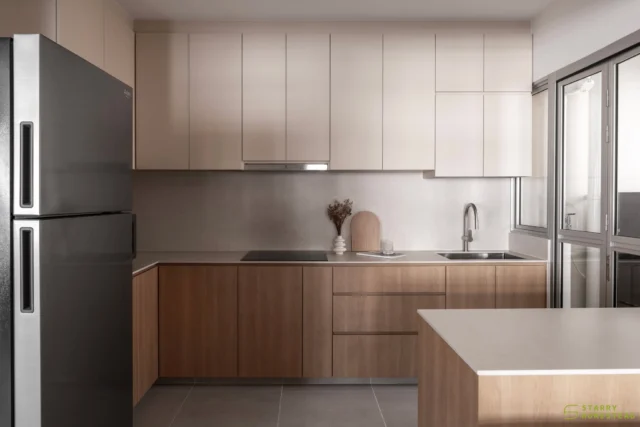

Walk through any materials showroom in Singapore and the kitchen top decision narrows quickly to two names: sintered stone and quartz. Both are dense, non-porous surfaces built for the demands of a working kitchen, and both appear across HDB, condominium, and landed homes.
The quartz vs sintered stone question comes up in nearly every kitchen we design, so this comparison sets the two side by side across durability, design, heat and stain resistance, maintenance, and cost.
What Are They?
A quartz kitchen top is an engineered surface, made from crushed natural quartz bound with resin and pigments. Sintered stone contains no resin at all. It is formed entirely from natural minerals compacted under extreme heat and pressure, a process that mirrors how stone forms in the ground.
Both resist moisture and bacteria by nature, which is why they have become the default choices for Singapore kitchens.
Durability
Under regular kitchen use, both materials shrug off chips, scratches, and corrosion. Sintered stone edges ahead on scratch resistance, owing to its denser composition, though either surface will hold up well for years of daily cooking.
Verdict: Both are durable. Sintered stone carries a slight advantage under heavier use.
Design and Aesthetics
Quartz offers the wider catalogue. Because it is engineered, its patterns, veining, and colours run from subtle to bold with plenty in between. Sintered stone reads as more organic, closely resembling marble, granite, or concrete depending on the finish, and its larger slab formats mean fewer joint lines across a wide surface.
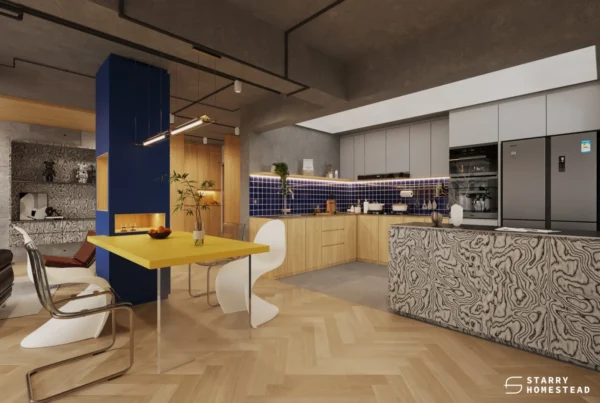
For example, a condo interior designer will often recommend the larger format for open-plan units, where a kitchen top flows into an island, though the same logic applies in any home with a wide, continuous counter.
Verdict: Quartz for variety. Sintered stone for a natural, continuous look.
Heat and Stain Resistance
Both surfaces resist everyday kitchen stains and wipe clean easily. The separation appears at high temperature. A sintered stone kitchen top tolerates direct contact with hot cookware, while the resin in quartz makes it more prone to heat marks and gradual discolouration.
Verdict: Sintered stone, for households that cook often and at high heat.
Maintenance
Neither material is porous, so neither harbours bacteria, and neither needs the sealing that natural marble demands. A damp cloth handles the daily upkeep for both.
Verdict: A tie.
Cost
The quartz table top price generally comes in lower of the two. The sintered stone price reflects what the material offers in return: higher heat tolerance, larger slabs, and an all-mineral composition. For households planning to stay put and cook hard, it tends to justify itself over the life of the kitchen.
Verdict: Quartz costs less. Sintered stone earns its difference over time.

So Which Should You Choose?
| Sintered Stone | Quartz | |
|---|---|---|
| Durability | Excellent, denser | Excellent |
| Design | Natural, large formats | Widest variety |
| Heat resistance | Very high | Moderate |
| Maintenance | Minimal | Minimal |
| Cost | Higher | Lower |
The choice between quartz or sintered stone rests on how your kitchen is actually used. Homeowners often meet this question for the first time during a BTO kitchen design, when every surface is being chosen at once, and the answer differs from household to household.
Frequent high-heat cooking and a preference for stone-like finishes point to sintered stone; a tighter shortlist of looks is easier to find in quartz.
Starry Homestead provides interior design services across the full range of local homes, from compact HDB kitchens to landed house design in Singapore, and material selection is part of every kitchen we plan. Speak with our designers to weigh the two against the way your household cooks.